Wednesday, May 16, 2007

A True Scholar


Ever wondered what Indians ate before New World food arrived? Ever wonder how it arrived? (answer: two completely distinct routes.)

All of this is based on the scholarly work of K. T. Achaya: "Indian Food : A Historical Companion" (published by Oxford India.)

The book is obsessively researched, and requires a substantial knowledge of linguistics, history (both culinary and otherwise,) and food. There are twenty pages of two-column 8-point references, and an index which requires the full knowledge of Indo-European (and then some!)

It's far from dry; it's funny, witty, engaging, in short, thoroughly entertaining. However, it's a very taxing read. the CC could barely read more than ten pages a day (and the book is 250+ pages.) The CC literally has tens of pages of detailed notes on ideas/references to chase down.

Even the very few facts that are wrong are due to the fact that the research was done after the author died. This is a staggeringly brilliant piece of research. (It clearly is the magnum opus of a lifetime of work.)

(Incidentally, he published a separate book called, "A Historical
Dictionary of Indian Food" just to guide people trying to read this
book.)

The book is completely out of control -- it has in-depth discussion of 16th century Gujarati dishes (what is the formal distinction between naashto and farsan?), documented evidence of what is claimed to be the Buddha's last dinner (and what it really consisted of,) what food terms made their way into Sanskrit from older Munda languages (answer: most of them,) and what chandala really means (answer: dog-eater.)

Anyone who's interested in Indian food simply must read this book!

Tuesday, May 15, 2007

On Champagne

Madame Lily Bollinger (heir of the Bollinger estate) on champagne:

I drink it when I'm happy and when I'm sad.
Sometimes I drink it when I'm alone.
When I have company I consider it obligatory.
I trifle with it if I'm not hungry and I drink it when I am.
Otherwise I never touch it, unless I'm thirsty.

Monday, May 14, 2007

Shopping with the Stars

The CC is most emphatically not a starfucker.

However, he was tickled pink when he found himself at Kalustyan's, and right behind Zarela Martinez (her of authentic Mexican cooking fame.)

For the record, Ms. Martinez was buying all the classic ingredients of Italian cooking (dried chanterelles, etc.)

Hah! even the stars eat differently than what they're good at.

Sunday, May 13, 2007

Asparagus Odors

The CC loves it, but the aftermath is well-known. The body metabolizes it, and the sulphur-containing compounds (thiols and thioesters) are excreted in the urine.

The funny part is that even though everyone metabolizes the product the same way, only 40% of the population have the genes to actually smell it.

Put it differently -- everyone stinks, but only 40% recognize that they stink.

The CC will make the obvious warning about eating asparagus before an energetic bout of oral sex.

Saturday, May 12, 2007

Penne with Tomato and Nutmeg

Well, summer is fast approaching so the CC thought he would write up his absolutely favorite recipe ahead of time.

The CC hopes that at least one reader will implement it, and send "fan mail" (or "hate mail".)

Mail is like publicity; bad mail is better than no mail; a stony silence is just boring.

Ingredients

4 lbs cherry tomatoes (quartered)
5-6 cloves garlic (finely minced)
2 tbsp ground nutmeg (fresh obviously!)
olive oil
salt
pepper (lots)
basil (shredded into pieces by hand)

penne (cooked al dente)

Recipe

The recipe is simplicity itself. Your guests will think you worked hard while all you did is be utterly patient while enjoying a dry martini.

Fry the garlic soffrito. The garlic should be a pale golden but NOT burn.

Add the tomatoes; turn down the heat to a very low heat; add in the salt and fresh pepper, and let simmer for at least 40 minutes. (You may need to add a little water towards the end.)

Toss in the nutmeg, and basil right at the end. Serve over the penne.

Thursday, May 10, 2007

Food, Sex, and Professionalism

Julian Barnes talks about constructing recipes from cookbooks by famous chefs:

Lesson Two: that the relationship between professional and domestic chef has similarities to a sexual encounter. One party is normally more experienced than the other; and either party should have the right, at any moment, to say, "No, I'm not going to do that."

Precisely!

Wednesday, May 9, 2007

Parmesan Crisps

Last weekend, the CC and a friend had lunch al fresco up in the northern parts of Manhattan.

The CC encountered an unusual item with his ravioli, a "parmesan crisp". The CC is reasonably sure that this was first invented by Thomas Keller (he of French Laundry fame -- for his "deconstructed" Caesar salad, actually.)

It's quite amazing that this invention has entered the conventional vocabulary of modest (albeit upscale) cafés.

So the CC was curious enough to see how it's made (expect to be experimented upon, ye who eat at the CC's!) Readers, you will either need parchment paper or silpat.

Ingredients

parmigiano-reggiano (grated by hand)

Recipe

Lay the grated cheese in 2-2.5" heaped rounds upon parchment paper.


Bake 8-10 mins at 275F.


Cool for 30 seconds, and lift off with a spatula.

Tuesday, May 8, 2007

Dirty Tricks

The investigation of umami leads you inevitably into the dirty, dark world of commercial, haut cuisine trickery.

It turns out (and the reason is obvious) that many a fancy chef "brighten up" or "tangify" the flavors by adding a dash of fish sauce (or the vegetarian equivalent, diluted strained miso.)

Nobu's black cod with miso no longer looks very impressive to the CC.

Consider this the haut cuisine equivalent of the average Chinese takeout adding MSG (same scientific principle at stake except MSG is an industrial product.)

Hmmm... the CC seems to have started at a food principle, and ended up opening a can of worms!

The Economics of Food

There was an excellent article on the economics of food by Michael Pollan in the New York Times Magazine a little while ago.

He has provided the entire article on his website: link.

The article asks the correct question (ed: rephrasing is mine)

How can it be that an processed product with 39 ingredients, packaging, shipping, and a marketing budget be cheaper than a bunch of carrots (which are, basically, nothing more than roots pulled out of the ground?)

The article is bang on target, and it pretty much explains why there's such a strong negative correlation between income and obesity.

Monday, May 7, 2007

Gelato outside Italy

This blog has never done an endorsement but the CC is going to make an extreme exception for this company.

They make, hands down, the best gelatos and granitas the CC has eaten either inside or outside Italy, and this Italian boutique just opened a chain up the street from the CC.

Yes, it's super pricy (but cheaper than a flight to Italy,) and it's packed with a line of yuppies out the door (but you get the same yuppies in Milan!)

They are called GROM.

Sunday, May 6, 2007

Tomato Risotto with Saffron and Vegetables

Well, the early summer vegetables looked gorgeous, and the weather called for a early summer risotto so the CC complied.

(A conversation with a reader of this blog about this resulted in the reader exclaiming, "umami-rich" about this recipe, and while the CC didn't quite plan that, the astute observation of the reader is both appreciated and commended.)

Ingredients
1 lb shallots (diced finely, or just use the food processor)
4 lbs tomatoes (dunked in boiling water, passed through a food mill)
1 tbsp homemade tomato paste
2 cups Carnaroli or Arborio rice (the CC used the former)
1/2 lb asparagus (tips separated, cut into thin rounds)
1/2 lb young carrots (cut into thin rounds)
1/2 cup tender peas
1 large pinch saffron
olive oil
parmigiano-reggiano
black pepper
dry vermouth (optional)

Recipe

Dilute the tomato pulp with water, and keep it simmering on a low flame in a separate vessel.

Fry the shallots in olive oil soffrito. Fry the tomato paste until the oil separates. Toss in the asparagus rounds, and carrot rounds and fry for a bit. Fry the rice till it is fully coated with the mixture, and the white kernel is clearly visible. Toss in the saffron and then do the risotto thing.

Add a ladleful of boiling tomato broth while stirring. When absorbed, add more, and repeat until the rice is tender.

The asparagus tips and the peas should go in near the end. The CC also adds a dash of dry vermouth towards the end.

The CC couldn't find good basil so he did without it, but ideally he would've garnished it with torn basil leaves.

Serve, with freshly grated parmigiano-reggiano, and black pepper.

Salsify

No, the CC is not further enriching the English language by turning nouns into verbs (a tendency that is as old as English itself.)

The CC came across while browsing through some Southern oyster recipes, and since the CC has turned blasé and so seldom runs across new stuff in cookbooks, he hied himself to the net to find out what this was?

Surprise! It's a plant with roots.


The root supposedly has the texture of carrots, and the taste of oysters (which probably means umami, and now the CC wants to find it!)

Friday, May 4, 2007

Buñuel's Martini

Anyone who knows the CC knows that he loves his martinis, and anybody who knows the CC knows that the CC loves the movies of the surrealist, Buñuel.

This then is Luis Buñuel's martini. The CC is convinced that Buñuel wasn't just a perfectionist in his movies.

To provoke, or sustain, a reverie in a bar, you have to drink English gin, especially in the form of the dry martini. To be frank, given the primordial role in my life played by the dry martini, I think I really ought to give it at least a page. Like all cocktails, the martini, composed essentially of gin and a few drops of Noilly Prat, seems to have been an American invention. Connoisseurs who like their martinis very dry suggest simply allowing a ray of sunlight to shine through a bottle of Noilly Prat before it hits the bottle of gin. At a certain period in America it was said that the making of a dry martini should resemble the Immaculate Conception, for, as Saint Thomas Aquinas once noted, the generative power of the Holy Ghost pierced the Virgin's hymen "like a ray of sunlight through a window-leaving it unbroken."

Another crucial recommendation is that the ice be so cold and hard that it won't melt, since nothing's worse than a watery martini. For those who are still with me, let me give you my personal recipe, the fruit of long experimentation and guaranteed to produce perfect results. The day before your guests arrive, put all the ingredients -- glasses, gin, and shaker -- in the refrigerator. Use a thermometer to make sure the ice is about twenty degrees below zero (centigrade). Don't take anything out until your friends arrive; then pour a few drops of Noilly Prat and half a demitasse spoon of Angostura bitters over the ice. Stir it, then pour it out, keeping only the ice, which retains a faint taste of both. Then pour straight gin over the ice, stir it again, and serve.

Tuesday, May 1, 2007

Dum

"Dum" or "dum pukht" is a style of Awadhi cooking.

Patience is not just expected; it is demanded. This is slow cooking, and by slow, the CC means very, very slow.

Hours are expected; half-days are demanded; and real connoisseurs (not that there are many left) scoff at the very notion of time.

We are talking "Americans-need-not-apply"-slow, "screw-making-money-let's-be-hedonistic-bastards"-slow, "life-is-sex-food-games-and-music-preferably-in-excess"-slow.

The CC hopes that the lack of subtlety is being felt in rather unsubtle ways.

Which brings us to the second point -- the spices. This is not a "subtle" cuisine; this is a cuisine of kings where excess is celebrated. More is actually too little, and a hell-of-a-lot-more is barely getting your foot in the door.

If there were a cuisine that were to be diametrically opposed to classical French cuisine, this would be it. The irony, of course, is they share far too many of the grammatical and functional traits that make cooking a science (except subtlety.)

Well, the two traits of "slow cooking" and "over-the-top spices" cannot interact, right?

The art of spices is in the smell, and long cooking would dissipate the volatile aromatic compounds that make up what's so desirable about them.

That brings us to the technique.

There is a pot; the pot is filled with stuff (spices and all); the pot is sealed with dough (more on this later,) and put over a very, very low flame (or alternately in an oven at a very low heat.) Ideally, it would be buried in coals, but us moderns, must do as best we can with our pathetic little kitchens.

(On a side note, these modern kitchens are considered progress? By whom exactly?)

Hours/days later, the pot is brought (with the seal) to the table; the king had the pleasure of breaking the dough, which brings us to the "dum" (literally, the "breath" but figuratively, the "first smell".)

Why use dough?

Dough is flexible but impermeable. If made correctly, it will expand but not break; nor will it release the volatile smells that make up the "dum" until the seal is broken.

(You can approximate this with aluminum foil in a pinch but the CC considers it cheating. The CC has cheated before but the CC is aware that he is cheating, and is not exactly proud of himself.)

Well, as for the recipes, you'll just have to keep reading the blog.

Umami

The fifth flavor; it is sensed by specialized receptor cells on the tongue which detect the presence of glutamates.

The best way to describe it is "savory" or "meaty", and it is a major part of virtually every world cuisine except it took till 1908 to identify it conclusively.

Here's a brief list of foods high in "umami":

aged Parmigiano-Reggiano (off the charts, actually!)
aged blue cheese (in general)
anchovies
nam pla (Thai fish sauce)
fresh tomatoes
tomato sauce (with salt -- read below)
boiled potatoes
mushrooms (particularly shiitake)
fresh oysters
fresh clams
dry-aged steak (the only kind the CC will eat)
kelp (konbu -- which is where this was first detected.)
katsuobushi
soy sauce

The flavor is particularly enhanced in the presence of salt, the glutamate ions, and the Na+ ions work in conjunction.

Hmmm... looks like the CC's taste buds are particularly zoomed in on this taste.

Sunday, April 22, 2007

Oysters

Traditionally, they are only supposed to be eaten in months containing an "R".

The CC being a traditionalist complies, and only eats them in:

April, September, Jrune, January, November, Raugust, February, October, Jurly, March, December, and Mray.

Saturday, April 21, 2007

Cookbooks and personality

One of the genuine pleasures of reading cookbooks is when the personality of the author shines through from beneath what, after all, is a manual.

Here's Marcella Hazan talking about her kitchen instruments:

Nearly all the kitchens I have seen, mine included, have more tools and pots and gadgets than are strictly needed.

The "mine included" -- succint, delicately placed, and gently ironic -- creating a perfect bond of complicity between author and reader. She knows what you're thinking, and she sympathises. She's here to help.

And she's responsive to our whims, our love of convenience and short-cuts like a lovable grandmother.

There is not the slightest justification for preferring homemade pasta to the factory-made. Those who do deprive themselves of some of the most flavorful dishes in the Italian repertory.

When you are unable to get good fresh tomatoes, rather than cook with watery, tasteless ones, it's best to turn to the dependable canned variety.

Even when fresh porcini -- wild boletus edulis mushrooms -- are available, the dried version compels consideration ...

But not too indulgent, of course.

She has tried, "again and again", to reconcile the use of the microwave with the principles of Italian cooking, and "happily, she has failed."

How can you not be tickled? When was the last time you heard someone say, "Happily, I have failed"?

On "instant" polenta (as opposed to the real deal):

It is so easy and takes such little time to make polenta using the instant product, that I wish I could regard it more favorably.

Isn't the last turn of phrase just heart-breakingly delightful?

Anchovies

The world separates out into two categories: those who hate anchovies, and those who can't get enough. Unsurprisingly, the CC falls into the latter category.

If all you've had is the godawful stuff they put on pizzas (except a few good places,) you really owe it to yourself to give it another try.

The combination of garlic, olive oil, and anchovies is heavenly. When cooked, the anchovies "dissolve", and the dish takes on a surprising complexity. If you've ever had a well-made Caesar salad, rest assured that the "tanginess" of the salad dressing is due to the anchovies in it.

This recipe is simplicity itself. Perfect for an evening when you're tired.

Ingredients

olive oil
10 cloves garlic (whole)
2 dried red chillies (go easy here!)
20 anchovy fillets
2 cups cherry tomatoes (halved)
fresh black pepper (lots!)
salt (to taste)
flat parsley (chopped)

tubular pasta like penne (cooked al dente.)

Recipe

Fry the whole garlic (+ dried chillies) till the garlic is golden (and slightly bloated.) Toss in the anchovies, and cook till they are just falling apart. Add the tomatoes, salt and black pepper, lower the heat, and cook for 7-8 minutes till the mixture becomes "saucy".

Toss with the pasta and parsley and serve.

Wednesday, April 18, 2007

Crab Masala

This recipe has a relatively large number of ingredients, and is a bit of work, but if the CC can cook it on a weekday night with an injured thumb then so can you. This is truly lip-smackingly good.

Put on some music, and start chopping!

(This would also work with prawns, or mussels.)

Ingredients

crab meat (cleaned)
1 large onion (diced finely)
1 large potato (diced coarsely)
4 small tomatoes (cut into quarter-rounds)
8 cloves garlic (ground into a paste)
1 inch ginger (ground into a paste)
5 Thai green chillies (slitted vertically)
1 tbsp cumin seeds
4 tbsp coriander powder (roasted and ground)
1/2 tsp freshly ground black pepper
1/2 tsp turmeric powder
1 tsp Indian red chilli powder
1/2 cup fresh grated coconut (frozen is fine)
15-20 fresh curry leaves
3 tbsp tamarind paste (or a little more to taste)
1/4 cup cilantro leaves (chopped finely)
salt to taste

Recipe

Fry the onions till they are golden. Add the ginger-garlic paste, green chillies, black pepper, cumin, coriander, red chilli powder, turmeric, curry leaves, and salt; fry for a minute or so.

Add the diced potatoes, and fry for 2-3 minutes, followed by the tomatoes. Cover, and let simmer till the potatoes are slightly tender. Add the crab meat, and cook for 8 minutes or so. Add the tamarind paste, and the grated coconut, and cook uncovered for a minute or so.

Toss in the chopped cilantro right before serving.

Friday, April 13, 2007

Pepe's (in New Haven)


The original "New Haven" pizza with a coal-fired oven!

The CC (and his friends) had a clam pizza, and the crust is absolutely divine. For once, reality lives up to the hype.

Better believe it!

Sukke

This is an amazing Indian side-dish (from the west coast) but this is not a recipe. This is a meta-recipe.

Even the linguistics gives it away. It literally means "dry" but dry what exactly? Well, that's the meta- part!

Alas, they didn't have mathematical notation back in the day otherwise the CC would've begun the recipe as "∀V" (where V is a vegetable) do:

(Ignore the above. It's the CC's inner mathematician.)

For the record, the recipe varies up and down the coast. Towards the south, the recipe is as the CC records it. Up the coast, they start adding green chillies (Northern influence), and sugar (Gujarati influence.)

You may think, "What the hell? This doesn't look so special.", but rest assured, this stuff disappears the fastest every single time when the CC makes it.

Also, please don't make any substitutions. For starters, there's not a whole lot to substitute ergo you're looking at boiled V's minus the flavor.

Ingredients

2 tbsp mustard seeds
10-12 curry leaves
3 cups "vegetables"
3/8 cup grated coconut
salt to taste

Recipe

Heat some oil in a pan. When it's hot, add the mustard seeds, cover the pan, until they pop. Toss in the curry leaves and fry for 20 seconds. Add the vegetables, coconut, and salt.

You may need to add a couple of tablespoons of water but remember the "dry" part!

Cook until the vegetables are tender. (If you use a multitude, add the "toughest" ones first followed by... etc.)

Tuesday, April 10, 2007

Conch (in New York)

So the CC has actually gotten off his ass, and wended his way to find conch in New York.

It's frozen but that doesn't affect the texture so it's great! Also expensive but worth it.

Fried Toor Daal

The ultimate comfort food when the world gets you down. Serve with basmati rice, or fresh parathas.

Ingredients

2 cups toor daal (pigeon peas)
1 tbsp cumin seeds
1 large red onion diced
5-7 Thai green chillies (substitute by serranos)
salt to taste

Recipe

Cook the daal in 3 cups of water (+ salt.) Alternately, just pressure cook it until it is soft (but not mushy.)

When that's done, in a separate vessel, heat some oil. Toss in the cumin and stir; add the onions and chillies and fry for a few mintues; add in the daal, and cook for 5-6 minutes.

That's it!

Sunday, March 18, 2007

Edible Indispensability

So the CC is going to make a (partial) list of things he finds indispensable around the house.

Paranoia reigns so these are staples chez le CC (running out of these makes the CC very upset.)

The CC is not talking about staples like salt, pepper, and olive oil. Nor is he talking about dried stuff like lentils. These are semi-fresh/perishables that must be maintained in continuous supply.

And we're talking ingredients that invoke pure desperation (a.k.a. panic attack,) not something that you can easily live without.

  • Garlic (There have only been two days in the last 10 years minus garlic in the house. Those two days were the worst of the CC's cooking life. Never again!)
  • Homemade tomato-paste.
  • Dried porcini mushrooms.
  • Rices: (basmati, and arborio.)
  • Frozen grated coconut, frozen peas, frozen corn.
  • ginger, green chillies, fresh curry leaves.

    So gentle readers, is there anything you find indispensable?

    C'mon folks! It's feedback time.
  • Friday, March 16, 2007

    Sichuan Food

    Last night, the CC had dinner at the most amazing Sichuan restaurant. They were told not to dumb down the food for the foreigner (the CC was the only non-Chinese person at the restaurant) but they did a slight dumbdown anyway. Oh well!

    Vegetarians definitely need not apply here (or in general, for traditional Chinese food.)

    For cold appetizers (traditional), we had seaweed, jellyfish and pig skin (three dishes.)

    For the main course, we had carp.

    Friday, February 16, 2007

    Buttermilk (South-Indian style)

    Well, the CC has been working a lot from home, and he's been making this in large quantities to have some with lunch, etc.

    It's amazingly simple.

    Buttermilk in India doesn't refer to the same thing as here. It's basically 1 part yogurt blended with 2/3-1 part water (depends on whether you like it thick or watery.)

    You need to good "Greek-style" yogurt for this. Most of the yogurt in this country sucks, and if the CC may say so in the pop-vernacular, "it sucks ass!"

    The difference in this recipe is the addition of mustard seeds, and curry leaves.

    Recipe

    Fry some mustard seeds, add the curry leaves and fry for a bit. Toss it in with the yogurt, and water in the blender, and blend it.

    It'll last as long as yogurt lasts so you can make quite a bit of it, and store it.

    Saturday, February 10, 2007

    The Science of Skimming

    The CC would like to talk a little bit about the science of immiscible liquids, and how it applies to cooking.

    Basically, oil and water are immiscible. Also, oil is far less dense that water which means that if you slowly pour oil into water, and wait for a while, all the oil will rise to the surface.

    This is precisely what makes vinaigrettes so unstable. Over time, the oil and the vinegar separate out.

    (And no, the CC is not going to talk about the theory of statistical mechanics that makes this happen. Not unless he is drunk in which case he bears the right to pontificate about all kinds of scientific and cooking topics.)

    Suffice to say, that a gentle heat speeds up this process of separation (more molecular kinetic energy for the science types.) However, extreme heat (in the form of boiling,) or extreme shaking (which is the same thing science-wise) breaks up the two liquids into small drops which then appear to mix (emulsification.)

    Please note that the two liquids haven't really mixed. They are giving the appearance of having mixed, and will separate out once again if left alone (again, think vinaigrette.)

    So a very slow heat that prevents boiling will allow all the fat to come to the surface from which it may be skimmed off.

    A reader of this blog was very surprised when she clearly saw the two liquids separate when the CC made dinner, but it's elementary science not magic.

    However, the trick, as always, is very very low heat, and patience. Sadly enough, in the modern world, the latter seems to be in short supply.

    Asparagus and Leek Soup

    A very classic recipe. A tad early but they somehow had good early spring asparagus at my grocery store.

    Ingredients

    6 leek tops (cut in rounds)
    3 pounds asparagus (you're only going to use the tips)
    2 cups broth (use "neutral" broths like a light vegetable broth, or a chicken broth)
    2 cups water
    1/4 cup coarse parmigiano-reggiano (you can use stuff that's slightly past its prime)
    rosemary
    salt
    pepper
    lemon juice (?)

    Recipe

    Fry the leeks, until they are soffrito. Add the asparagus tips, and fry until it turns bright green. Add the rest of the ingredients, and simmer on extremely low heat for 20-25 minutes or so.

    Skim, baby, skim!

    Dump the stuff in a blender, and pass through a sieve if you want a smooth soup.

    Sometimes I add a little lemon juice to brighten up the flavors.

    Serve with a crusty baguette.

    Saturday, January 27, 2007

    Undhiyu

    This is perhaps "the" Gujarati dish. A delicious medley of spring vegetables slow-cooked to perfection.

    On a personal note, the CC never liked this as a kid, but age even if it doesn't bring wisdom, does indeed bring more things to eat. Hurrah!

    The dish quite literally means "upside down". A whole slew of delicious vegetables, spices, and prepared foods were tossed into a clay pot, the whole ensemble was sealed; the pot was placed upside down in a pit, and a fire was built on top of it. The embers surrounded the entire pot, and the dish was slow-cooked.

    Needless to say, this is quite literally impossible in the modern kitchen (although if anyone is willing to do the work, the CC will fly to anywhere within the 48 states with the ingredients.)

    The dish crucially relies upon "green garlic" (a.k.a. "spring garlic",) and no! substitutions may not be made.

    Most of the ingredients listed below are reasonably exotic in the US (although one can easily get them in Indian grocery markets in spring and summer.) Thankfully, someone has had the wisdom to provide them in frozen form which while not quite ideal, is not bad.

    The whole recipe is going to take the better part of half a day to cook (if you want to do it right, and the CC knows you do!)

    The uncommitted need not apply.

    There are many parts to this recipe so the CC is going to present the recipe sectionally. Commentary is added in italics for your delectation.

    Please don't forget the final goal. Dump the entire melange into a pot, and slow cook.

    Recipe

    Methi muthiya

    1 bunch fenugreek leaves finely chopped(methi)
    1/4 cup whole wheat flour (the Indian fine-ground kind not the supermarket one.)
    3/4 cup chickpea flour (besan)
    1 tbsp green chilli-ginger paste
    1/2 tsp turmeric powder
    juice of 1 lime
    salt to taste

    Mix all the above, and knead into a soft dough. Add some water if needed.

    Divide the mixture into 20-25 portions, and shape each like miniature American footballs.

    It's a joy to watch experienced cooks shape these balls. They work so fast that it's hard to believe!

    These need to be fried. Pan-fried is fine with a thin layer of oil as long as you keep rotating them. Drain on a paper towel, and keep aside.

    The Spices

    1/2-3/4 cup fresh green garlic (chopped)
    4 tbsp dhanajeeru (roasted cumin-coriander seeds powdered)
    2-3 tbsp green chilli-ginger paste
    3/4 cup cilantro (finely chopped)
    1/4 cup fresh coconut grated
    2 tsp chilli powder
    1 tbsp carom seeds (ajwain)
    1 tbsp lime juice
    salt to taste

    You can just use the food processor for this. And, "frozen grated coconut" is available in Indian grocery stores. This is the ultimate modern convenience since freezing doesn't affect the texture.

    The Vegetables

    2 cups surti papdi
    2 cups purple yam (kand), diced into cubes
    2 cups yellow yam (suran), diced into cubes
    2 cups "new" potatoes
    1 cup sweet potatoes, diced into cubes
    4-5 small eggplants (the tiny, round Indian ones)
    3 plaintains

    1/4 tbsp asafoetida
    4-5 tbsp green chilli-ginger paste

    Here are some of the ingredients:

    green garlic


    kand


    surati papdi


    The eggplants and the plaintains need to be cut in a special way since they are going to be stuffed with the spices above.

    Some pictures are worth a thousand words:


    See the slits? That's where the spices from section 2 are going to get stuffed into.

    Heat 8 tbsp oil in a pan. Add the asafoetida, followed by the green chilli-ginger paste and fry for a bit. Add the eggplants, and the plaintains, and fry till the eggplant is just slightly tender.

    Add all the stuff to the pot, and seal the pot. Traditionally, this is done using dough but foil will do in a pinch.

    Reduce the heat to the lowest setting, and cook for roughly 40-50 minutes. Don't open it!

    (Alternately, you could just put the whole thing in the oven at 400F for about an hour.)

    Tuesday, January 23, 2007

    Don't prejudge the chef!

    Frequently, the CC is asked what kind of food he enjoys cooking, and the answer is all kinds. For those, you have visited the CC, you're aware that the shelves are groaning with cook books, and technique manuals.

    In fact, the CC would argue that technique (or the science of food) is far more useful than just reading recipes because one can extract the key idea rather than the specifics of a culinary tradition (which does not mean that the latter is not important -- it is supremely so, as well!)

    There was a recent article in the New York Times that sums this up: A Yankee Chef With a Mexican Flavor.

    ON a train from Dublin to Shannon recently, I struck up a conversation with an elderly man sitting across from me.

    “What do you do?” he asked, recognizing my American accent.

    “I’m a chef.”

    “What kind of food.”

    “Mexican,” I replied.

    “Mexican?”

    He chewed on that for a few seconds. A Yankee making Mexican food? How could I pretend to know about Mexican food?

    Sure, Americans traveling abroad expect to be treated like pariahs these days. But I get more than my fair share because I’m the ultimate outsider: a Yankee who prepares Mexican food. And who also happens to have a Swedish surname.

    Mexicans are particularly suspicious. I was recently asked to judge a competition for young chefs in Mexico City, the Joven Chef Mexicano. Oddly, they hadn’t scheduled me for any of the sessions, so I just wandered around the competition, trying to make conversation with the other chefs.

    But no one would talk to me. They just looked at me as if to say, “What’s this Yankee doing here?” I felt like an interloper.

    Then Guillermo González Beristain, one of the most reputable chefs in Mexico, greeted me. Guillermo had also attended my alma mater, the Culinary Institute of America, and within a few minutes, we were having an animated conversation. Suddenly, everyone else warmed up to me, too. I felt as if I was surrounded by friends.

    Why do I specialize in Mexican cuisine? Because it’s some of the most diverse food on the planet. It’s complex, it’s often a challenge to prepare, and it’s delicious. Being an outcast is a small price to pay for that kind of culinary calling.

    I’m even willing to sustain some friendly fire. At the annual Hispanic Children and Families fund-raiser, which benefits underprivileged Hispanic children, I set up a table for our restaurant. There’s an elite group of Latin American chefs that also participate in the event. I’m always cast as the outsider by them.

    Last year, I made cochinita pibil, a traditional pork dish from Yucatán, with plantains, pickled onions, habanero chiles and tortillas. The chefs would come by the table, help themselves to the samples, whisper something to each other and leave. But at least they were eating.

    Mexicans are perplexed that anyone would want to develop an expertise in cooking their food. South of the border, the chefs usually specialize in Spanish or French food, although lately, Mexican cuisine has been getting a lot more respect.

    On a recent visit to the Vendimia Wine Festival in Ensenada, I met several Mexicans who didn’t get it. Unfortunately, they were border guards in Tijuana. I was trying to bring supplies across the border to cook a trio of ceviche — marinated raw fish in lime — and duck carnitas with mole coloradito, for the festival’s gala dinner. When the guards saw the food, they turned me back.

    “Please,” I begged them, “It’s for an important dinner.”

    But the idea of an American preparing Mexican food was so odd that they figured we had to be up to no good. Seeing the impasse, I tried a last-ditch effort. I dropped a name.

    “The governor of Baja California will be there,” I said.

    The guards conferred with one another. An American cooking Mexican food — for the governor? It sounded so preposterous, it had to be true.

    “Señor,” said the guard. “You may go.”

    Monday, January 15, 2007

    Cilantro Chutney

    Simple, straightforward with modern technology, and tasty (unless you're one of those wierdo's to whom cilantro tastes soapy.)

    Nothing like fresh bread lathered with this stuff.

    Ingredients

    3 bunches cilantro tops washed clean
    1/2 cup peanuts
    1/4 cup lime juice
    6 birds-eye chillies, chopped into rounds (substitute with serranos)
    salt to taste

    Recipe

    Dump in a blender, and grind to a thick paste by adding water only if necessary.

    Salsa : Corn with chipotles en adobo

    The CC has forgotten where he came across this recipe but it is so simple that it should appeal to both your senses, and your love of having good food without too much bother.

    No matter what quantity the CC makes of this one, it always disappears! Always!

    The CC once doubled up thinking he could get some for later but no! it was gone by the end of the evening.

    Ingredients

    8 cups corn (frozen is fine, just thaw it.)
    1/4 cup sun-dried tomatoes
    1 can chipotles en adobo

    Recipe

    Heat the oven to 350F. Spread the corn in a flat tray, and let it dry out for 30 minutes or so. It needs to be fairly dry but watch carefully since the stuff burns easily.

    Reconstitue the sun-dried tomatoes in hot water. Dice them into very fine pieces.

    Toss the corn, the sun-dried tomatoes, some of the water from the tomatoes, and diced chipotles en adobo with some of the adobo sauce to taste.

    Bitter Gourds

    This is the proverbial line-in-the-sand.

    On one side, are the I-like-Indian-food-if-its-not-too-spicy types, on the other, are the true connoisseurs of regional Indian cuisine.

    The karela is the dividing line. It separates the women from the girls.

    A couple of tricks to make it slightly less bitter. If you cut it into fine rounds, soak it in heavily salted water for at least an hour (longer is better.) This is just simple osmosis at play.

    If you plan to stuff it, slit it lengthwise, remove the seeds, and sprinkle with coarse salt (a.k.a. "kosher salt".) Don't worry about the salt, you can always wash it away later. More is good.

    Right before you prepare it, you need to squeeze the fruit to further remove the bitter juices.

    Fried Karela with Cashews and Raisins

    Ingredients

    5 small karelas, cut into rounds, debittered (as above)
    1/3 cup peas (frozen is fine.)
    1/3 cup cashews (broken)
    1/3 cup raisins
    1/2 tsp asafoetida
    2 tsp cumin seeds
    2 tsp coriander seeds
    1/2 tsp chilli powder
    1/4 tsp turmeric (optional)
    4-5 tbsp brown sugar
    1 tsp poppy seeds
    salt to taste

    Recipe

    Roast the cumin and coriander seeds in a skillet for a bit. Don't allow them to burn. Put them in the coffee grinder, and make a fine powder. You will see this referred to frequently as dhanajeeru (dhana = coriander seeds, jeeru = cumin seeds.)

    Heat 2 tbsp oil in a skillet. Add the bitter melon, and fry for a while. Add the sugar and let the sugar caramelize over the bitter melon. (You may need more sugar.) Take the stuff out of the pan, and dry pat with a paper towel.

    Heat 1 tbsp oil in a skillet. Add the asafoetida, followed by the dhanajeeru, the chilli powder, and the cashews. Fry for a bit, add in all the ingredients, and let it cook till the peas are cooked.

    Wednesday, January 10, 2007

    Mea Culpa

    It has been a few months but the CC has been extremely busy so he is just getting around to editing and posting various half-written articles over the last few weeks or so.

    Coming up soon in technicolor: the CC's Thanksgiving Dinner, and other assorted high-jinks.

    He Invented What?

    College students everywhere must be in mourning!

    The inventor of "Ramen noodles", Momofuku Ando has passed on.

    Sunday, December 24, 2006

    The Rules of the Game

    When you're faced with a recipe that has an unknown quantity of various spices, here's the CC's meta-interpretation of the recipe:

    Add a lot of the spices you like; a "reasonable" amount of what you're neutral to; and very little of what you don't.

    Not exactly Julia Child but the CC has never gone wrong with it.

    Happy Holidays!

    Sunday, December 3, 2006

    The "No-Knead" Bread : An Update

    So the CC has been making this bread on a fairly regular basis, and has a few comments to share.

    Firstly, this bread is very forgiving in terms of quantities, timings, etc. Traditionally, baking is not known for being forgiving. It's the perfect sport for the "anal-retentive control-freak" types (except that "rises" are outside their control so they make up for it by trying to control everything else.)

    If you've never handled truly slack dough before, I still urge you to try this one out. The results are so consistently spectacular that it's hard to believe. Even my failures are really good, and the CC is getting very used to even slacker dough than this recipe. (Yes, ladies and gentlemen, the CC is still learning on the job.)

    If you've never made bread before, please realize that the "cooling down" is part of the process, and it may not be hurried. The bread is still "baking" on the rack as it cools down. In fact, if you've made the bread well, you should hear wonderful crackling sounds (that can be quite loud) while the bread cools down.

    The CC is aware that the temptation of cutting it too soon is always going to be with us, but patience pays off.

    Happy baking!

    Wednesday, November 22, 2006

    Thanksgiving Traditions

    Well, turkey is conventional but we all have our own little traditions.

    The CC always features pomegranates at his Thanksgiving dinner.

    How did it start? Many a moon ago, the CC's friends and the CC decided that they liked pomegranates better than cranberries, and so it began.

    The CC tries to vary it up each year, featuring it in totally different ways, everything from pomegranate juice and champagne to dessert made with pomegranates.

    One year, the CC was being helped by a "cooking virgin". Needless to say, the CC could hardly resist handing him the task of plucking the pomegranate seeds.

    The poor boy plucked out each seed one by one not knowing how to pluck a pomegranate. After half an hour, the CC showed him how to invert the peel, and brush off the seeds. His jaw dropped, some choice words were bandied about the CC's heritage, he hastily retreated in a sulky mood to the boudoir, beer in hand, and proceeded to yell at the television until the rest of the guests arrived.

    Whee! What fun we have together!

    So readers, what are your traditions for Thanksgiving?

    Tuesday, November 21, 2006

    No-Knead Bread (from the NYT)

    The CC is not in the habit of other people's recipes verbatim, but this thing is so fucking amazing that you might as well blow out the CC's brains with a 2x4.

    The internet forums have been buzzing about this for the last week or so. You might've thought that Elvis was making a reappearance or something from the buzz that this thing got.

    Warning: this dough is absurdly slack (roughly 72% baker's hydration,) so you need a little bit of experience working with this kinda dough. However, this recipe is so fool-proof (rare in the bread world!) that you can hardly go wrong.

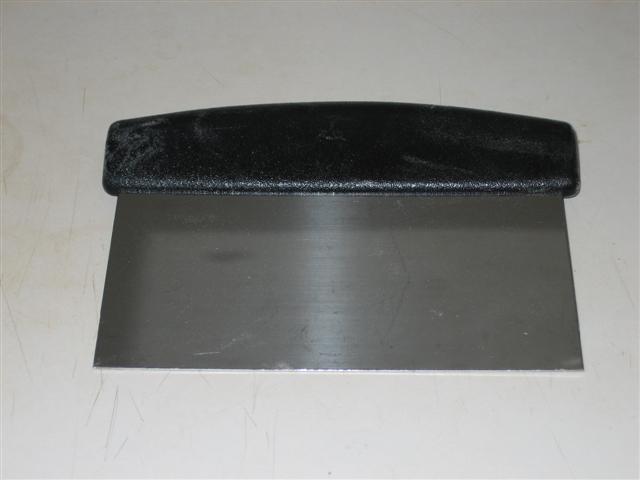
    You will need a "baker scraper" which is a steel thing with a super blunt edge so that you can scrape the dough off a flat surface.


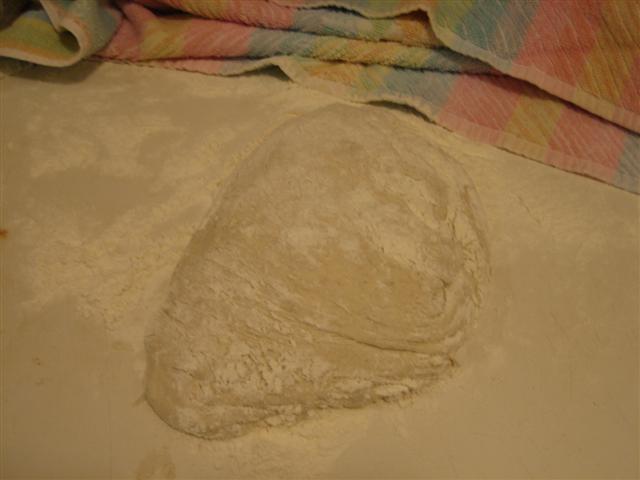
    This bread is absolutely amazing. Here are some pictures of the CC's effort.


    November 8, 2006 New York Times
    Recipe: No-Knead Bread

    Adapted from Jim Lahey, Sullivan Street Bakery
    Time: About 1 1/2 hours plus 14 to 20 hours' rising

    3 cups all-purpose or bread flour, more for dusting
    1/4 teaspoon instant yeast
    1 1/4 teaspoons salt
    Cornmeal or wheat bran as needed.

    1. In a large bowl combine flour, yeast and salt. Add 1 1/2 cups water, and stir until blended; dough will be shaggy and sticky. Cover bowl with plastic wrap. Let dough rest at least 12 hours, preferably about 18, at warm room temperature, about 70 degrees.

    2. Dough is ready when its surface is dotted with bubbles. Lightly flour a work surface and place dough on it; sprinkle it with a little more flour and fold it over on itself once or twice. Cover loosely with plastic wrap and let rest about 15 minutes.

    3. Using just enough flour to keep dough from sticking to work surface or to your fingers, gently and quickly shape dough into a ball. Generously coat a cotton towel (not terry cloth) with flour, wheat bran or cornmeal; put dough seam side down on towel and dust with more flour, bran or cornmeal. Cover with another cotton towel and let rise for about 2 hours. When it is ready, dough will be more than double in size and will not readily spring back when poked with a finger.

    4. At least a half-hour before dough is ready, heat oven to 450 degrees. Put a 6- to 8-quart heavy covered pot (cast iron, enamel, Pyrex or ceramic) in oven as it heats. When dough is ready, carefully remove pot from oven. Slide your hand under towel and turn dough over into pot, seam side up; it may look like a mess, but that is O.K. Shake pan once or twice if dough is unevenly distributed; it will straighten out as it bakes. Cover with lid and bake 30 minutes, then remove lid and bake another 15 to 30 minutes, until loaf is beautifully browned. Cool on a rack.

    Yield: One 1 1/2-pound loaf.

    Saturday, November 18, 2006

    Cauliflowers : Part 2


    Purple cauliflowers!

    The color is from the formation of anthrocyanins.

    Cauliflowers : Part 1


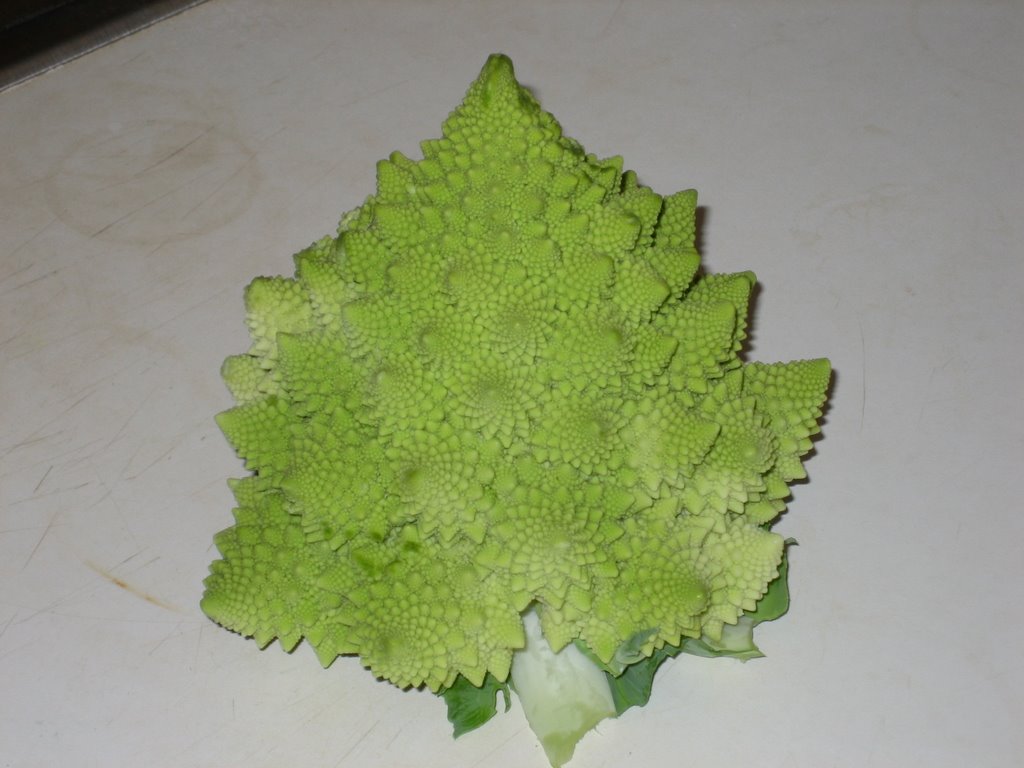
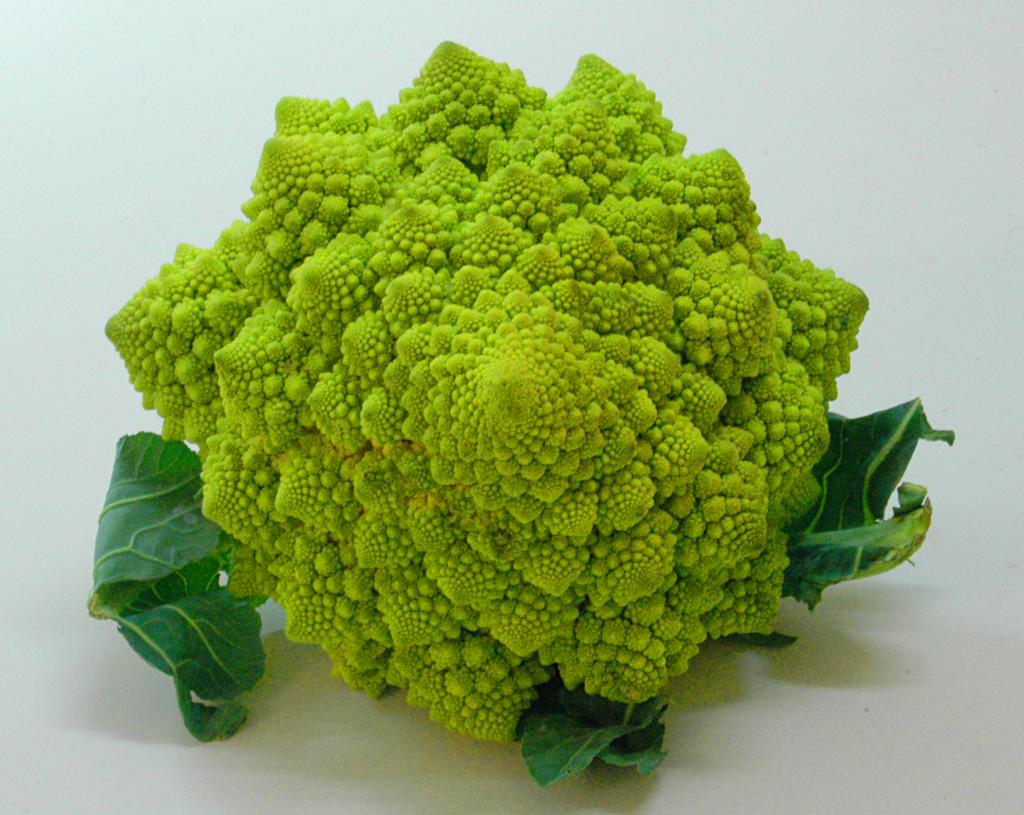
    Can you say fractal and Fibonacci series?

    This amazing beauty is a Romanesco cauliflower.

    The CC found it at his local farmers' market.

    The CC is just about ecstatic at the wondrous combination of his two loves, food and mathematics!

    Monday, November 13, 2006

    "Lemon" Rice

    The "lemon" in the recipe actually refers to "lime" as the CC has discussed in the Hindenburg of culinary disasters!.

    This is a basic everyday kinda recipe from the South of India, and like basic everyday kinda recipes, you have to make it just so, otherwise you'll be left wondering what the fuss was all about.

    Made right, this is the ultimate comfort food.

    Theoretically speaking, this is no different from a risotto except with different flavoring, and the rice is slightly firmer, and less "wet".

    The CC will grant that the ingredients "seem" a bit a exotic. They're not exotic in India (duh!) nor are they particularly exotic in any city that the CC has lived in or visited (which means both coasts, and Chicago.)

    In fact, minus one ingredient, they are downright pedestrian.

    This must be served with yogurt. Good yogurt, the Greek kind, not the pasteurized garbage that passes for food in this country.

    Guess what the CC is eating for dinner tonight!

    Ingredients

    6-8 curry leaves (this is the exotic one! try dried if you can't get fresh)
    1 tbsp mustard seeds
    2 tbsp "urad" daal (lentils, easy to get at your local Indian store.)
    1 medium red onion, diced (optional)
    3-5 serranos (cut into very fine rounds)
    1/4 cup peanuts
    1 cup basmati rice (no other will do!)
    1/4 tsp turmeric
    juice of 4 limes
    salt

    Recipe

    Fry some oil, and add the mustard. Cover, and wait till the mustard "pops". Add the urad, fry for a bit, add the onion, fry for a bit (till pale), add the serranos, fry for a bit, add the curry leaves, fry for a bit, add the peanuts, fry for a bit, add the rice, fry till the rice is coated with the oil.

    Add the turmeric and salt, and roughly 1.5 cups of water. Turn to a low simmer, and let it cook uncovered till the rice is nearly cooked. Add the lime juice towards the end.

    Serve hot with yogurt!

    Sunday, November 12, 2006

    Harlem Renaissance

    Who would've guessed, say a few years ago, that Harlem would turn into a foodie powerhouse?

    In hindsight (always a dangerous game,) it's not unreasonable.

    Over the last few weeks, I've been to two amazing places in Harlem, one Haitian, and the other Ethiopian. There's also the French-Senegalese place that I can't sing enough praises of (and which the CC has dragged people to over their objections -- you know exactly who you are, and you were wrong, and the CC was right, and that's all that counts in the end!)

    Think of this blog entry as a "teaser trailer". Call me if you actually want to go to these places.

    You know you want it!

    Friday, November 10, 2006

    Controversial Recipes

    Who knew that this bipartisan blog would draw controversy?

    The recipe that seems to have generated much finger-waving, and hand-pointing is the recent recipe for Chocolate-covered garlic.

    Comments (all private!) have ranged from, "Really?" to "I don't believe you!".

    Thankfully, nobody so far has run a campaign to trash the CC's character on televison.

    So let's understand why this recipe works from a scientific point of view. Out comes Harold McGee's tome, On Food and Cooking, which the CC will note is both exhaustive and exhausting.

    Like the sunchoke family and its relatives, the onion family accumulates energy stores not in starch, but in chains of fructose sugars, which long, slow cooking breaks down to produce a marked sweetness.

    Incidentally, these fructose sugars are not directly digestible by humans explaining the "gas" produced when eating raw onions, garlic, shallots, etc. Both the sulphurous content, and the indigestibility are Darwinian "defense mechanisms" against mammals eating the food store. (Hence also, the "sting" of sharp onions.)

    But, we humans figured out a way.

    Roasting garlic (and the whole onion family) is a time-honored way of changing its aggressive sulphurous character into a much sweeter one. In this particular case, the recipe is really braising (along with a ton of sugar) which will turn the garlic both soft and sweet while eliminating the volatile sulphurous molecules that make it "garlicky".

    Hopefully, this intellectual argument will detract some of the objectors, but really, the best way is to just experience it first-hand!

    Tuesday, November 7, 2006

    Simple French Food

    One of the words in the title of Richard Olney's book is like a time-release bomb waiting to go off.

    The CC will not be providing hints as to which one.

    After a six page discussion on the definition of "simplicity" (uh oh!), we are informed that "simplicity is a complicated thing", and that "If food is not good, it is not simple."

    By this definition, everything from a hard-boiled egg to beef bourgignon is "simple" but only if it is "good".

    The CC is not making this up, you know!

    However, this is a wonderful book which everyone should have. It is simply too brilliant for words.

    He does give a great way of poaching eggs perfectly each time - boil water, turn off heat, crack an egg, cover, leave it alone, repeat for more.

    Now, that is in the ordinary sense of the word, simple.

    The purpose of this post is to warn the reader so that, unlike the CC, they will neither be scarred for life nor need therapy.

    Monday, November 6, 2006

    Chocolate-covered garlic

    This recipe sounds downright stupid at first but it's actually really really good.

    Ingredients

    24 cloves of garlic (peeled)
    1/2 cup red wine
    1/4 cup sugar
    4 tbsp lemon zest
    1 bar "high" cacao chocolate

    Recipe

    Bring the first four ingredients to a boil. Cook on very low heat uncovered for 25-30 minutes (stirring occasionally.) Let it cool for a bit. The cloves should be quite sticky.

    Melt the chocolate (you can either microwave at a low heat, or dip a glass bowl in boiling water.)

    Dip each clove in the melted chocolate, and place them on a piece of foil. Transfer to the refrigerator and let it cool for at least an hour.

    Best eaten fresh.

    Sunday, November 5, 2006

    Kalustyan's

    It's the temple of food.

    You readers in New York should already know it. If not, you might as well move to Kansas.

    For the rest of you, name an exotic rice, spice, flour, or lentil, and this place has it. It's even alphabetized because there's no Dewey Decimal System or ISBN system for food (particularly when it comes from all around the globe.)

    Regional conflicts need not apply!

    However, the CC dreads going there because each time he goes there he ends up dropping more than he rationally should. Oh well! At least he and his friends eat well.

    What's more they ship around the world. Give it a whirl!

    Raw Beef (Ethiopian style)

    The way to judge an Ethiopian restaurant is how well they make kitfo which is raw ground beef mixed with mit' mita (finely ground "hot" spices), and nit' ir kibbeh (also spelt qibe which is clarified butter cooked with spices.)

    Vegetarians, and food-phobes need not apply!

    The first time the CC went to a restaurant that specialized in it, the staff came out twice to ask if we were sure of what we were getting.

    "We are", cried the CC and his good friend.

    Then the chef came out to make doubly sure that we knew of what we wanted. Not only were we not disappointed but we had a magnificent evening because the staff loved us for ordering their specialty.

    Last night, the CC ate at a lovely place in South Harlem that had excellent kitfo. The waitress positively glowed when the CC praised the kitfo.

    Try it! You may even get addicted to it. (Watch this space for a recipe.)

    Wednesday, November 1, 2006

    The Role of Illusions

    Every once in a while, we are called upon to make dishes with constraints in mind. This is truly the mark of a good chef.

    Cooking is like magic. Sometimes you need to create an illusion.

    The CC was called upon to make a classic French Onion Soup minus the beef.

    "Impossible, you say?"

    "Hard work," says the CC.

    The CC made a traditional beef broth side by side with a mushroom broth more than a few times till even the most discerning audience could not tell the difference. In fact, he served it with impunity to an audience (who loved it,) and then revealed the truth.

    The CC presents a mushroom broth quite specifically made for classic French Onion Soup (recipe to follow.)

    Ingredients

    1 large red onion (diced)
    1 lb crimini mushrooms (quartered)
    2 large portabella mushrooms (diced)
    2 carrots (diced)
    1/2 cup celery (diced)
    3 bay leaves
    1 sprig rosemary
    10-12 peppercorns
    salt to taste
    olive oil
    10-12 cups of water (approximate - just fill the pot.)

    Recipe

    Saute the onions in olive oil until pale pink/slightly brown. Add the peppercorns, and saute for a bit. Add the carrots and celery and saute for a bit till soft. Add the mushrooms, and saute for a bit. Add the cold water (it's important that it be cold.) and bring to a very low simmer.

    Simmer for 70-90 minutes while skimming periodically.

    Over a bowl, strain the broth from the vegetables using a sieve lined with several layers of a cheesecloth. Let the vegetables cool for a while. Take the cheesecloth and squeeze the vegetables to extract more of the juice into the bowl until no more comes out. Discard the pulp.

    You may freeze this for a long time.

    Tuesday, October 31, 2006

    Chestnuts

    ... roasting on an open fire!

    A bit early, but what the heck? It's getting cold out here in New York.

    Here's something to keep you warm...

    Chestnut Soup

    Ingredients

    1 large onion (roughly chopped)
    8 cloves garlic (roughly chopped)
    2 celery stalks (roughly chopped)
    1 large carrot (roughly chopped)
    3-4 cups broth (homemade, but use commercial, you wimps!)

    fresh sage
    fresh rosemary
    2 bay leaves
    salt
    fresh pepper (lots!)

    30-35 chestnuts (read below why!)

    Recipe

    It's all going to get pureed so don't waste time cutting it in detail.

    Incise the chestnuts with a large X. Roast at 375F for 15 minutes or so. The X will peel off, and you can pull them out, and deshell them. They need to be deshelled while they are still warm.

    Some fraction will be moldy. Toss them. You won't be able to resist eating a few. So you will end up with roughly 24-26 which is the correct number for the recipe. See my point?

    Fry the onion and garlic soffrito. Toss in the everything but the chestnuts, and fry for a minute or so. Toss in the broth. Let it simmer for 10 mins.

    Toss in the chestnuts, and let it all simmer for 15 minutes.

    Puree it, and serve with some crusty bread.

    Sunday, October 29, 2006

    Scaring up a meal

    Every home cook has faced this problem before.

    It's Sunday, you're too lazy to go shopping, you need a tasty but simple meal that you need to scare up before the evening is over but the larder is bare (or as bare as the CC's larder ever gets.)

    What was at hand?

    5 tomatoes (from the farmer's market.)
    onions and garlic (staples at the CC's.)
    the usual arsenal of dried ingredients and spices
    the usual arsenal of frozen stock, and pastes in the freezer.
    a quarter-chunk of parmigiano-reggiano (a miracle!)

    All this inevitably pointed towards pasta, and out came Marcella Hazan. Jump to the section on tomato sauces, a little poking around, and what do you find?

    Tomato Sauce with Porcini Mushrooms

    A slight modification was made (no pancetta) but it was relatively insignificant.

    Ingredients

    1 small onion (finely diced)
    1 tbsp olive oil
    5 large tomatoes (skins removed, passed through food mill.)
    1 oz dried porcini mushrooms (+ filtered water from mushrooms)
    salt
    black pepper
    freshly grated parmigiano-reggiano

    Recipe

    Reconstitute the mushrooms.

    Fry the onions (or shallots) till it becomes a pale gold. Add the tomatoes, the mushrooms, the strained liquid from the mushrooms, salt, and several grindings of pepper. Adjust heat so that the sauce bubbles at a gentle but steady simmer. Cook in the pan for 40 minutes (yes! this is correct) till the fat and the tomato separate. Skim.

    Toss in the pasta, and serve with freshy grated parmigiano-reggiano.

    Note: This sauce is surprisingly "rich" (not in the traditional high-fat sense.) It could easily pass as a meat sauce even though it's totally vegetarian.

    Marcella Hazan has been beatified, while Julia Child can cry herself to sleep on the bookshelf!

    Kitchen Instruments

    On my vacation, the CC was asked if he was a "gadget freak" by the sister of the mother of the wife of this dear friend of mine.

    "Absolutely not!", cried the CC in alarm, at the risk of being classified along with the Williams-Sonoma freaks!

    "In that case," she retorted, "tell me what kitchen instruments you find indispensable."

    So the CC hied himself on a mental walk around his kitchen (we were greedily gorging some lamb (cooked deliciously rare) laced with rosemary, and spanakopita on their familial farmhouse at the time.)

  • Blender, and food-processor

    Big duh there!

  • Coffee grinder

    The CC actually uses it to grind fresh spices (both roasted, and unroasted.) Even Indians don't understand good Indian cooking until you have it made with freshly ground spices. (If the CC had to pick just one instrument, this would win hands down!)

  • Pressure Cooker

    Everything from beans to conch!

  • Juicer

    The CC never knew how much he would miss it until he had one. Juice of forty limes? Not a problem!

  • Food mill

    Ditto! Where have you been all my life?

  • Cheese plane grater

    You don't understand until you own one. Trust the CC on this one.

  • Mortar and pestle

    The CC is "old school". Some things cannot be improved upon.

    Sure the CC would miss the stones in the oven, and the pizza peel, or the steamers, and the zesters but they are not indispensable. The above constitute "basic necessity", at least in the eyes of the CC.

    So, gentle readers, are there things you find indispensable?
  • Lobster

    So the CC has never much cared for lobsters. However, the recent vacation to Maine has changed all that.

    Fresh lobster is as delicious as they say. The CC has OD'ed on both lobsters, and lobster rolls, and is eagerly looking forward to his next Maine vacation.

    The CC is delighted to learn that some things are distinctly geography-laden, and that even New York's proximity to Maine can change the potential of an edible that much.

    Which brings the grand total of things that the CC does not care for down to one : brussel sprouts. However, on the vacation, the CC gathered a crackling new recipe for it, and is raring to try it out. Here's hoping...

    Saturday, October 28, 2006

    Corn Salsa

    So the CC is invited to the birthday party of some friends, and was charged with making a bunch of salsas for the occasion.

    Over the years, this corn salsa (yes, I'm using the term loosely) has been one of the biggest hits at the CC's parties.

    Truth be told, the CC doesn't even remember where he got this recipe.

    Ingredients

    8-10 cobs of fresh corn (or 2 packages frozen)
    6 sun-dried tomatoes (reconstituted with hot water, and then diced)
    2-3 chipotles en adobo (diced)

    Recipe

    Place the corn on a baking sheet, and roast it in the oven at 300F for roughly an hour. Check towards the end, otherwise the corn might get burnt.

    Mix the three things together, and add a bit of the sun-dried tomato water.

    That's it! The simplicity belies the brilliance of flavors. Only problem? The dried corn sticks to your teeth. Heheheheh.

    Friday, October 6, 2006

    Vacation

    The CC will be taking a much needed vacation, initially to go visit the wedding of a very close friend in Massachussetts.

    Also featured on this trip will be culinary adventures of the seafood kind up and down the Eastern Seaboard.

    I promise interesting posts about the trip when I return.

    Sunday, October 1, 2006

    Clam Pizza

    Ever since spending his waking hours in Connecticut, the CC finds himself addicted to clam pizza?

    "Where have you been all my life?"

    Is the CC turning into an East-coaster? (Apologies to all of you on the wrong coast!)

    Comments, please!

    Tuesday, September 26, 2006

    Penne with Garlic

    This is literally one of the simplest dishes the CC knows, and is the ultimate "comfort food".

    The CC is a garlic fiend so garlic haters need not apply!

    Ingredients

    penne

    8-12 cloves garlic minced (per person)
    parmigianio-reggiano
    black pepper

    Recipe

    Bring a pot of salted water to a rolling boil. Add the penne, and cook till al dente.

    In a separate pan, fry the garlic in olive oil till pale golden (don't burn it otherwise it will turn bitter.) Toss in the pasta, and stir for 5 seconds.

    Dump it on a plate, and shave fresh parmigiano over it. Add freshly cracked black pepper too. (The CC adds very finely minced parsley if he has it.)

    Enjoy!

    Sunday, September 24, 2006

    The Universality of Human Taste : A Contest

    Is there a culture that doesn't have the combination of fried dough, and sweet stuff?

    We can argue about the details, but it seems to me that the above combination is pretty much as universal as it gets!

    We have the Italian-American zeppole (fried dough with powdered sugar), the Spanish churros (fried dough with "just-about-you-name-it" sweet stuff), the North-Indian gulab jamun (fried wheat dough dunked in sugar syrup); the list is endless...

    Donuts are similar (they use cake dough though.)

    Now, the CC is not exactly a sugar fiend, but the CC is organizing a contest.

    Add to the above list, and win a prize! (You can't just use a regional term, and win it; it must be original.)

    Every participant that offers up an original entry to the modest list above will be given a "no-holds barred dinner chez le CC".

    You know you want it!

    Saturday, September 23, 2006

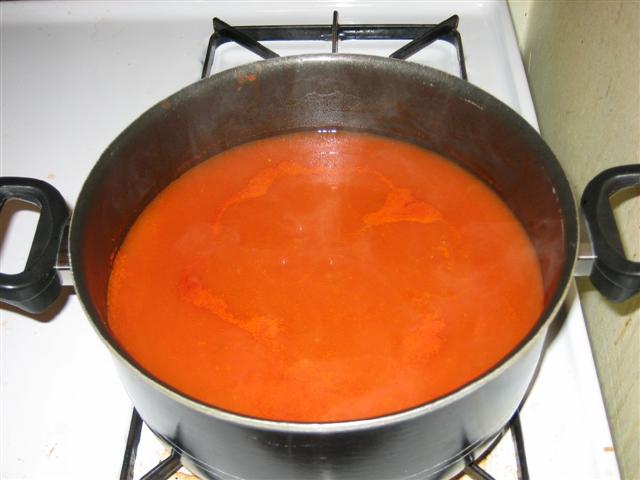
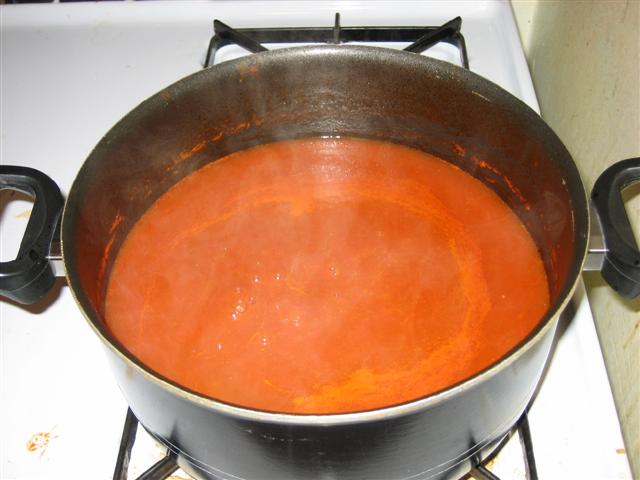
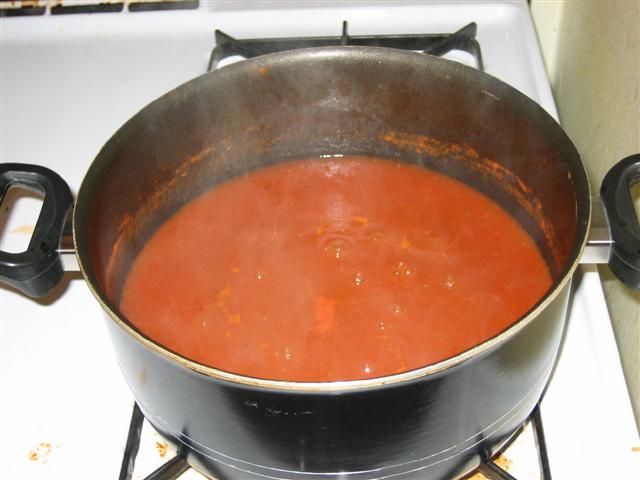
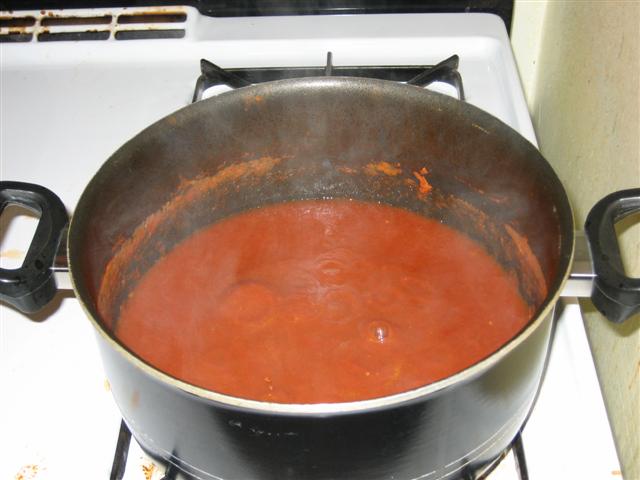
    Tomato Paste : The Pictorial Version


    After passing through the food mill


    Hour 2


    Hour 3


    Hour 4.5


    Hour 6


    The final product


    Even though it may not be immediately obvious, the stuff darkens considerably starting from a pale orange to a deep dark brownish-red.

    Cookbooks

    Recently, a friend of mine sent me an email:

    I realized the other day that I have all these fancy schmanzy cookbooks, but for anything basic I always resort to the net, which bugs me, because I prefer to have a giant, ingredient-stained tome on the table behind me when I cook, rather than an ingredient-stained laptop.

    What's your favorite basic cookbook?


    She also called the CC useless, but the CC refuses to succumb to bitterness.

    I'm going to give a non-answer in a Zen sort of way.

    I don't have a favorite basic cookbook. There, I've said it!

    The CC's shelves are lined with regional cookbooks. Everything from Afghani to Haitian cooking is included. There are regional cookbooks from just about every region of India, and translations of books from the 17th century to the present.

    So the CC is really unable to recommend a specific cookbook.

    I don't like The Joy of Cooking (too bland!) I do like Julia Child but only when I'm in the mood to be a perfectionist. I prefer Patricia Wells if I just want to put together a quick French bistro-style meal.

    So what is the CC good for?

    What the CC can do is to recommend a basic cookbook for any given cuisine. For Italian, I'd pick Marcella Hazan, for Mexican, Diana Kennedy, for Greek, Diane Kochilas, and so on and so forth.

    How's that for a non-answer?

    Tomato Paste

    Homemade tomato paste is simply one of those finer pleasures of life. The CC hates to act all rhapsodic but give this a whirl. You'll thank me in February!

    When the CC fries the tomato paste in winter, the entire house smells of tomatoes!

    The CC prefers to use heirloom tomatoes (preferably federle.)

    Photos of the process will be posted in a separate post.

    Ingredients

    12 lbs ripe summer tomatoes (quartered)
    olive oil
    salt

    Recipe

    The recipe is absurdly simple but takes a long time. You don't really have to do anything but you gotta stick around since you don't want your house to burn down.

    Fry some olive oil in a pot. Toss in the tomatoes, and let them melt (covered) on a low heat for roughly 30 mins or so. Take a food mill, and pass the stuff through the finest sieve.

    Put the strained stuff in a pot, and let it simmer on extremely low heat. This will probably take more than 6 hours or so, and no! you can't hurry the process.

    You will have to skim it every hour or so. The oil will separate out rather cleanly because of the extremely low heat. (You can even just sop it up with a paper towel!)

    By the end, the tomato paste will be very syrupy (caramelization is taking place,) and it will be a deep dark red.

    Toss in quite a bit of salt. You need this to preserve it. You can tone down the salt in the recipe that uses the tomato paste later.

    This stuff freezes beautifully, and should last a year.

    Sunday, September 10, 2006

    Risotto

    Risotto minus a dusting of parmigiano-reggiano is a travesty. I speak from experience.

    Weep, New York restaraunts, and weep, all you New York lovers, this is a fucking travesty.

    You may as well live in fucking Idaho!

    Saturday, September 9, 2006

    Mussels with garlic

    This is such an easy recipe, but unbelievably good. Try it on some Friday night when you're too tired to cook, but still want a good meal.

    Ingredients

    3 shallots cut into rounds
    10-12 cloves of garlic, cut into thin rounds (or more!)
    mussels
    clams
    1/2 cup finely chopped parsley

    salt
    lots of black pepper

    bottle of dry white
    crusty bread

    Recipe

    Fry the shallots in olive oil till they are light golden, fry the garlic. Add lots of black pepper, and some salt (not too much, the clams will exude some too.) Toss in the mussels, and clams, 1/2 cup of the wine, and 1/2 cup of water.

    Steam the mussels till they open (no more than 5-6 minutes.) Take it off the heat (important: or else the mussels and clams will shrink.) Stir in the parsley, and serve with bread. There should be a lot of liquid to sop your bread with (and it's fucking delicious!)

    If you like, you can pull the mussels, and clams with tongs, reduce the broth a bit, and then stir in the parsley, and pour it over the mussels.

    Dry wine, crusty bread, mussels with garlic. This is the life!

    Sunday, September 3, 2006

    Fava Bean Risotto

    OK, we've been through the risotto stuff on this blog before so let's keep this short and simple.

    Everyone should know the trick of a making a good risotto. Broth, on a low simmer in a different vessel. Keep adding to rice at periodic intervals, and stir.

    Ingredients

    2 lbs fresh fava beans (peeled, cooked, and 3/4-th of them pureed, keep the rest.)
    6 shallots (finely diced)
    4 cloves garlic (finely diced)

    4 cups arborio, or vialone nano
    5-6 cups vegetable broth (homemade, but use commercial, you wimps!)

    salt (depending on broth)
    pepper (a tad)

    freshly grated Parmigiano-Reggiano
    freshly grated black pepper

    Recipe

    Fry the shallots, and garlic soffrito. Add the rice, and fry for at least a minute or two, till each grain is covered in oil. Add the broth a ladleful at a time, and keep stirring. Add the fava bean puree towards the beginning, and the whole fava beans towards the end.

    Serve while hot, with freshly grated Parm, and black pepper to taste.

    Pappa al Pomodoro

    This is a poor man's recipe that went upscale, and over many years this is the most requested recipe chez the CC.

    The CC came across it in a bizarre manner.

    Many years ago, the CC was in Firenze on a conference, and we went to a restaurant appropriately titled "The Mad Cook".

    Now, this was a family space, and the chef was the seater, order-taker, and waiter.

    In deciding the "specials of the day", given that he spoke limited English, he called this "tomato soup".

    On ordering it, the CC had furious scorn heaped upon him by his friends -- "You come to Italy, and order tomato soup, etc."

    The soup arrived. It was unreal. Everyone wanted a part of the action, and the CC allowed them all a meagre taste, and left them to their pathetic appetizers while he enjoyed a wondrous soup.

    Two evenings later, the CC strolled by the restaurant to ask the chef about the recipe. The CC knows barely some Italian (Romance-language related), and the chef barely spoke English but somehow I convinced him that I was no rival chef, that I was a student, and "No, I will not open a restaurant with your recipe."

    These are important things in Italy.

    Ingredients

    1 large red onion (coarsely diced)
    lots of garlic cloves (chopped into largish pieces)
    1 stalk celery
    8 tomatoes (diced)
    3 tbsp tomato paste (homemade, but use commercial, you wimps!)

    basil leaves (two piles -- one loosely torn, one chiffonaded)
    stale bread (cut into largish rounds)
    olive oil.

    Recipe

    Fry the onion and garlic till light golden. Toss in the celery. Fry briefly. Toss in the broth, tomatoes, salt and pepper (to taste), tomato paste. Simmer on extreme low heat till the tomatoes concentrate. This should also sweeten the mixture. Add two cups of broth/water, and bring to a slow rolling boil.

    Turn off the heat, add the bread, and mix it all up. Make sure the broth covers all of it. Let it sit for a while.

    Add the torn basil just before reheating.

    When serving, serve with the chiffonaded basil, and fresh cracked pepper.

    Confessional

    It's Sunday, and even though I'm not Catholic, it's time to 'fess up on stuff I hate.

    Father, forgive me for I have sinned against the temple of cooking by hating:
    • Plucking cilantro leaves (or similar.) In fact, it always puts me in a crappy mood to the point where my friends volunteer to do it rather than have me bitch and moan.
    • Peeling the skin off the garlic.
    • Mincing garlic (ok! I hate it but it's gotta be done 'cause the end product matters, and the CC is a perfectionist.)
    • Taking the skin off the goddamn' fava beans.

    I used to hate my life until I bought a juicer. Now, I can juice 40 lemons (yep! 40), and not hate it.

    Saturday, September 2, 2006

    Fresh Fava Beans

    If you haven't ever eaten them, or cooked them, consider suicide as an alternative, given that you seem to be leading a mere simulacrum of a life eating crapola!

    They are easy to cook but time-consuming.

    Pod them, drop them in boiling water for 5-8 minutes, dunk them in cold water, and take off the papery outside shell.

    A bit of work, but not that much if you drink a fine glass of wine, and listen to some music while doing it.

    Vegetable Broth

    Most people don't seem to realize how easy broths are to make. They take time and effort, but the commercial crap is so fucking awful that the CC wants to cry over the death of the culinary arts.

    Normally, the CC's freezer is chock-full of broths, but I didn't have an appropriate broth for tomorrow's meal.

    So it was off to the local farmers' market to get fresh veggies in pissing rain.

    Everyone has a favorite broth recipe so you should take what's below as "generic", and feel free to muck with it.

    The only caveat that I want to add is that mushroom-based broths have a unique character so be sure that's what you want before you head there.

    I wanted a light summer broth, and wanted a mild citrusy flavor so I added lemon-grass (but you don't have to.)

    Ingredients

    1 red onion (chopped into large pieces)
    3 carrots (with fronds, chopped coarsely)
    1 zucchini (chopped into large rounds)
    3 leeks (cut into large rounds)
    3 stalks of celery (coarsley chopped)
    1 potato (cut into chunks)

    1 tsp fennel seeds
    1 tbsp black peppercorns
    3 bay leaves

    Recipe

    Fry the onion, and the leeks until they are translucent. Add the celery, and fry for a minute or two. Add the fennel, peppercorns, and bay leaves and fry for a minute.

    Now add the rest of the veggies, and fry them for at least 5-7 minutes. (I will explain the science behind this in a later post.)

    Add cold water to the brim of the pot (it is crucial that the water be cold!)

    Now the hard part, let the mixture come to a slow boil. As it does, the fat will come to the surface.

    Skim, baby, skim

    Let it simmer (uncovered) on a very slow heat for the better part of two hours. Keep skimming. (Yes, this is painful.)

    Take a cheese-cloth, and separate the broth from the crap. (Toss out the crap!)

    If you plan to freeze it, add salt to it. Don't worry about the fact that it is concentrated, you can always dilute it later.

    A Grand Meal

    Well, a grand meal is being prepared at the CC's place for a cousin (of sorts) whom I haven't seen in ages.

    The requirements are vegetarian ("trivial! you call that a challenge?") and kid-friendly ("there's a challenge") but also grand ("now, I double-dare you!")

    Watch this space. I will be blogging as I prepare the various items from scratch.

    Persistence Pays : A Black Bean Soup story

    In times past, the CC lived in another city, and within that city there was a Jamaican restaurant. They made a killer black bean soup.

    Now, this being one of those happy, clappy neighborhoods, they made it vegetarian (tradionally, they would've used some ham.)

    Oh, how we loved that soup!

    So, a friend and I went there three days in a row trying to discover the secret of this soup. Finally, one of the bright-eyed and bushy-tailed waiters noticed, and asked us what was up. So we told him, and he ran into the kitchen. He ran back (being all of 18, and not yet quite jaded) and told us the "important part", and the rest we just kinda figured out ourselves.

    Patience is required since this requires some planning.

    Ingredients

    4 cups dried black beans
    1 red onion (finely diced)
    2 tomatoes (finely diced)
    4 cloves garlic (finely minced)

    1/2 scotch bonnet (yep! 1/2, diced)

    2 tbsp fresh rosemary (finely chopped)
    1 tsp cumin
    3 bay leaves
    1/2 tsp ground cloves
    black pepper (lots)
    cilantro (finely minced)

    cooking sherry (sweet)

    Pre-preparation

    Soak the beans in water overnight. Next morning, rinse them, and then soak them in cooking sherry for at least 8 hours. Before cooking, separate the beans from the sherry, but keep the sherry.

    Recipe

    Fry the onion, and the garlic. Toss in the tomatoes, beans, water to cover, and the spices, and a good fraction of the sherry (depending on how sweet you want it to taste.) Cook for about an hour or more till the beans are cooked through.

    Throw in the scotch-bonnets towards the end otherwise it'll make the soup too hot.

    The cilantro is for sprinkling right before serving.

    Saturday, August 19, 2006

    A Haitian Meal (Part 4)

    Gluttonous, and happy, the CC and his friends sit.

    The house smells like tomatoes.

    The CC is deliriously happy, and is behaving like the average 7-year old (and the friends are too drunk to care!)

    Thank goodness for stone walls, floors, and ceilings!

    A Haitian Meal (Part 3)

    RICE & RED BEANS

    Deceptively simple, and yet utterly beguiling!

    Ingredients

    2 cups red kidney beans

    2 cloves garlic (minced)
    4 large shallots (diced)
    1 large onion (finely diced)
    8 cloves
    8 whole peppercorns

    4 cups long grained rice (the CC used basmati)

    2 tbsp olive oil
    1 tbsp fresh thyme leaves
    salt to taste

    Recipe

    Soak the beans overnight (or at least 8 hours.)

    Pressure cook them with salt till tender but not soft. (This is a tricky assignment!)

    Heat the oil, and fry the onions and shallots till soft. Add the garlic, and fry till golden. Add the cloves and peppercorns, and fry till they "plump" slightly.

    Add the rice, and fry for roughly a minute. Add the beans, thyme, and salt, and roughly 6 cups of water. Bring to a simmer, and let it cook until the rice is done. (roughly 10 minutes. You may need to add a little bit more water.)

    A Haitian Meal (Part 2)

    LAMBI

    Ingredients

    1 lb squid (cut into rings)
    Juice of 13 limes
    2 habañeros (chopped coarsely)

    4 lbs tomatoes (quartered)
    1 tbsp tomato paste (homemade, but substitute commercial you wimps!)

    1 large red onion (cut into semi-rounds)
    2 cloves garlic (minced)
    2 small green bell peppers (cut into strips)
    2 small red bell peppers (cut into strips)

    1 tbsp olive oil
    salt and black pepper

    Recipe

    The recipe really goes in three stages: marination, preparing the tomato puree, and cooking the stuff.

    Marinade the lime with the squid and habañeros for at least 4 hours.

    Prepare a pot of boiling water. Dunk the tomatoes for 4 minutes or so. Pass them through a fine food mill, and collect the puree. (A deceptively large amount of work is hidden in this rather innocent description.)

    WARNING: If you use heirloom tomatoes like I did, they have seeds that passed through the finest grade of my food mill. I had to pass it through a sieve lined with cheese cloth again!

    Heat the olive oil, and fry the onions until limp, and translucent, and the garlic, and saute until it turns light golden.

    Add the tomato paste, and fry for about a minute. Add the puree, and half of the both of the bell peppers, salt and pepper to taste, and turn the heat as low as possible.

    At this point experienced readers should know what to do.

    Skim, baby, skim.

    Add the rest of the bell peppers, and turn off the heat, and take the pot off the hot stove.

    Dump the squid, and a bit of the lime (but not the habañeros) in there.

    The last instruction may seem a tad mysterious but it isn't. One of the culinary crimes that this country commits is "overcooking the squid". Squid should not be rubbery! You are dumping it into a hot puree, it will cook by itself. Of course, if you cook with different seafood, the instructions will change.

    The idea behind adding half the bell peppers later is to create two textures, one slightly crunchy, and one more "soggy".

    Culinary Disasters (a clarification for posterity)

    The CC in one fell swoop will raise the quality of your Indian cooking to a new level.

    In an Indian cookbook, when they say lemon, they actually mean lime.

    The CC would know.

    This is a linguistic disaster turned into the Hindenburg of culinary disasters!

    A Haitian Meal (Part 1)

    A friend of mine has been begging me to write about this forever, but alas destiny intervened, and those that know the CC know that when destiny calls, the CC calls destiny back, and screws destiny to the wall.

    However, that is tedious and time consuming.

    But summer is here, and so are the good tomatoes. Since this recipe is tomato-heavy, the CC wandered down to the Farmer's Market to get some heirloom tomatoes. Once again, the guy berated me, "You weren't here last week. You expect me to sell these heirloom tomatoes to these proles?"

    The recipe is somewhat time consuming but obviously worth it. If you think it's not worth it, we'll settle it like gentlemen, "Chocolate soufflés at ten paces."

    I first had this meal at a Haitian restaurant. I desperately wanted to reproduce it so I consulted my two Haitian cookbooks.

    They agree on the fundamentals, but differ slightly on the details.

    Two things stand out:

    [1] Haitian food is heavily influenced by French cooking. Not a big surprise there. The same themes stand out : skimming, rouille, etc.

    [2] However, they adapted it to native fish, vegetables, etc. Shouldn't be a big surprise either.

    I chatted with the woman who runs the restaurant, and she said while it was traditionally made with conch, it's really adaptable to any kind of seafood, and once you see the recipe, you will see why.

    I made it with squid although I plan to make it with conch now that she told me where in New York I can find it.

    Sunday, August 6, 2006

    Tomatoes

    Well, summer is here, and so are the good heirloom tomatoes.

    The CC wandered down to the farmer's market yesterday morning. Had a chat with the farmer with the good tomatoes who complained that I buy nothing from him but tomatoes (simply not true, he has awesome fresh herbs.)

    Well, he's my age, and he's known me for five seasons so in a spirit of exuberant comradery, he yelled out to his siblings and co-workers, and most of New York, "Give this man whatever he wants! He's the only one who knows good tomatoes."

    The yuppies on the Upper West Side were surprised, and the CC blushed a deep red.

    However, it was supremely gratifying.

    I bought ten pounds of tomatoes (yes, you heard that right!), and dinner consisted of tomato soup, a baguette, and a bottle of wine.

    Two kinds of food enthusiasts

    There are two kinds of "foodies".

    The first are the ones who worship at the altar of the Michelin three-star -- white tablecloths, "fine" cuisine (*), and "service".

    The second prefer substance over style, and hence, authenticity over presentation. They'll take rickety plastic tables, and naked hanging bulbs if the food kicks ass.

    The CC clearly belongs to the latter school (although he will be the first to admit that he has learnt a lot from the former.)

    Consider this the first salvo in the "food wars".

    (*) You can always disguise crap cuisine with truffles! (And the sad truth about New York is that most "top" chefs do. Sad, really! Truly sad.)

    Calamari

    A.K.A. "squid", a.k.a. creepy-crawly stuff in the American imagination.

    The food critic for Vogue, Jeffrey Steingarten invented what he called the "Calamari Index", as in, how easy is it to get "fried calamari" in a typical American restaurant?

    It was obviously tongue-in-cheek, but has turned out to be remarkably prescient.

    There's scarcely a bar/pub on either coast (and a lot of in-between) that doesn't feature "fried calamari" on the menu. Note the change of name from "squid" to the much fancier Italian -- "calamari".

    Anyway, I highly recommend both of Steingarten's books : The Man Who Ate Everything, and It Must've Been Something I Ate.

    For the record, the CC is not getting any money off the links above, and the CC's friends will NOT be getting those books for their respective birthdays/Christmas.

    For the first time, ladies and gentlemen (you know who you are!), it's time to prove your dedication to the culinary arts.

    A.K.A., pony up the dough, bitches!

    Pasta nero

    A.K.A. "black" pasta. It's made with squid ink.

    It may not sound like much but it's utterly delicious, and served topped with squid in a tomato sauce, the dish is better than sex. (Well, not quite, but you get the idea.)

    Anyway, a few months ago the CC was dining at one of the local Italian restaurants on the Upper West Side, and was shocked to see that that the above mentioned dish had disappeared from their menu.

    The CC told the waiter, "Why would you do something that stupid?", at which point the waiter ran back to the kitchen, came back, and informed the CC that the chef would be happy to make the above dish for the CC.

    The chef delivered, and the CC was happy.

    (NOTE: Contrary to popular opinion, I'm actually easy to please. I just have high standards.)

    Why the post now?

    The CC is happy to report that the chef has seen the error of his ways, and as of last night, features, not one, not two, but THREE dishes with "pasta nero".

    Enough said!